Album Details
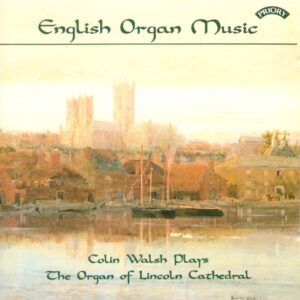
English Organ Music
Colin Walsh
Lincoln Cathedral, UK
Priory Records (recorded 1995)
Album Contents
Festal Flourish — Gordon Jacob
Introduction and Passacaglia — Walter Alcock
Master Tallis’ Testament (from Six Pieces) — Herbert Howells
Andante Soavemente e Dolce (from A Little Organ Book in Memory of Hubert Parry) — Charles Macpherson
Flourish for an Occasion – William Harris
Prelude in E flat major (from Four Short Pieces) — William Harris
Reverie (from Four Short Pieces) — William Harris
Elegiac Prelude — George Bennett
Sovereigns Fanfare — Arthur Bliss
Fanfare for the Bride — Arthur Bliss
Wedding Fanfare — Arthur Bliss
Chorale Prelude on “Melcolmbe” (from Seven Chorale Preludes, Set 1) — Hubert Parry
Postlude on a Theme of Orlando Gibbons (“Song 22”) (from Six Preludes and Postludes, Op.105) — Charles Stanford
Fantasia and Toccata, Op.57 — Charles Stanford
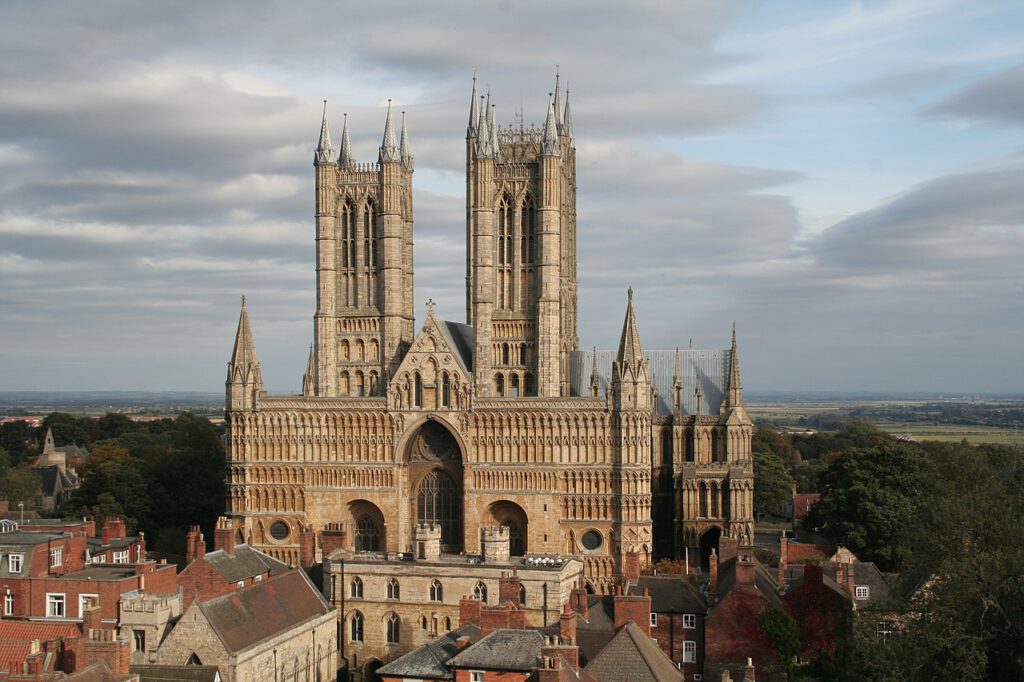
Image courtesy of Robert Stephens, CC BY-SA 2.0, via Wikimedia Commons.
The combination of Priory Records, Lincoln Cathedral and Colin Walsh is a definite winner, as evidenced through numerous recordings, most of it of the French romantics (Walsh’s great love) but with forays into “popular” fare, and a couple of Bach releases too. This album of romantic English music is a welcome outlier, his only, I think, in this genre – the majority of his studio recordings (as opposed to a significant number of live concerts performances issued for download) are from Lincoln and Salisbury Cathedrals, wonderful organs certainly, but not with a true French accent to them. Thus, English music on this archetypal English organ at Lincoln is a very special combination, particularly with Colin Walsh at the console.
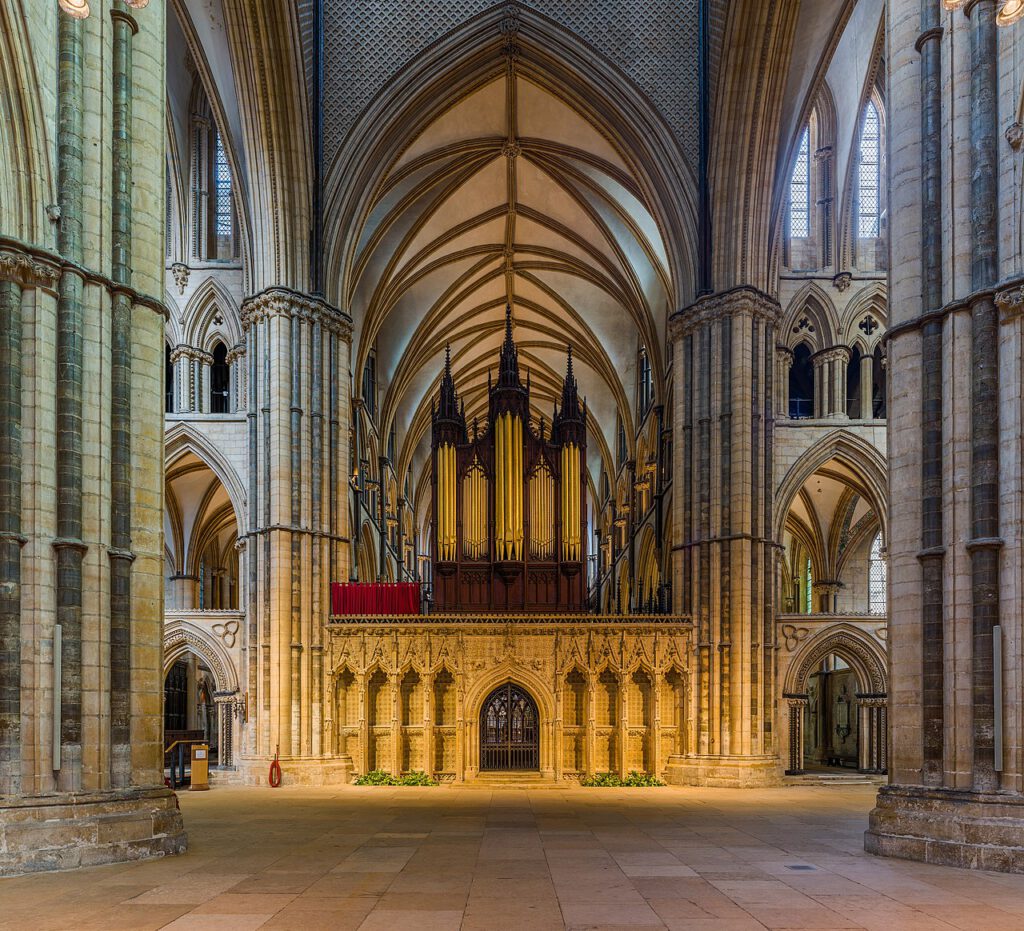
Image courtesy of David Iliff, CC BY-SA 3.0, via Wikimedia Commons.
The programme is generally well balanced, with substantial favourites (such as the Alcock Introduction and Passacaglia and Stanford Fantasia and Toccata) contrasted with some delightful smaller, and often less-known, gems (including the rich Elegiac Prelude by George Bennett, a former organist at Lincoln). The tuba fanfares of the opening Festal Flourish by Gordon Jacob are fabulous, but moving from its full organ conclusion straight into the declamatory tubas of Alcock’s Introduction and Passacaglia feels like too much of a good thing. Likewise, three royal fanfares by Arthur Bliss (written for the wedding of HRH Princess Margaret in 1960) played one after another is an embarrassment of sonic riches – but they’re short, and the Father Henry Willis pipework sounds so good its hard not to enjoy.
This recording offers sonic revelation after sonic revelation, a treasure trove of delights from the Willis organ.
Every work seems just perfectly suited to the organ, and Colin Walsh clearly knows how to harness the instrument’s four manuals and 64 speaking stops to bring each alive. This recording offers sonic revelation after sonic revelation, a treasure trove of delights from the Willis organ. Of course, it features everything that would be expected…fiery Swell reeds bursting out over the rolling Great diapasons; expressive orchestral reeds carrying eloquent, soaring melodies; the gentlest rumbles of a 32′ flue. But what particularly delights me is how it appears to showcase the real Lincoln organ – the sonorous 32′ Contra Posaune with that perfect balance of fundamental weight and decorous reedy roar on bottom C# as the Stanford Prelude reaches its conclusion; the many pneumatic clunks of the piston action throughout, heralding yet another change in registrational direction; the Solo strings emerging from in the tranquil calm that ends the Bennett, with just enough edge to add interest. Walsh is clearly a master of this organ, and Priory’s recording is the perfect complement, giving us a wonderful honest portrait of one England’s finest instruments. I often muse on which is the ‘best’ Willis (fully aware, I quickly add, that such a musing is rather pointless) – Hereford is wonderful, but the big H&H mixture and unique clang to the Solo tuba seem almost too idiosyncratic; Salisbury is just a little hard-edged; Truro, like Hereford, seems to be uniquely it’s own thing. But Lincoln seems extra special – nothing over the top, and a perfect blend of all the right ingredients, topped with a warm acoustic that adds beautiful atmosphere without detriment to clarity.
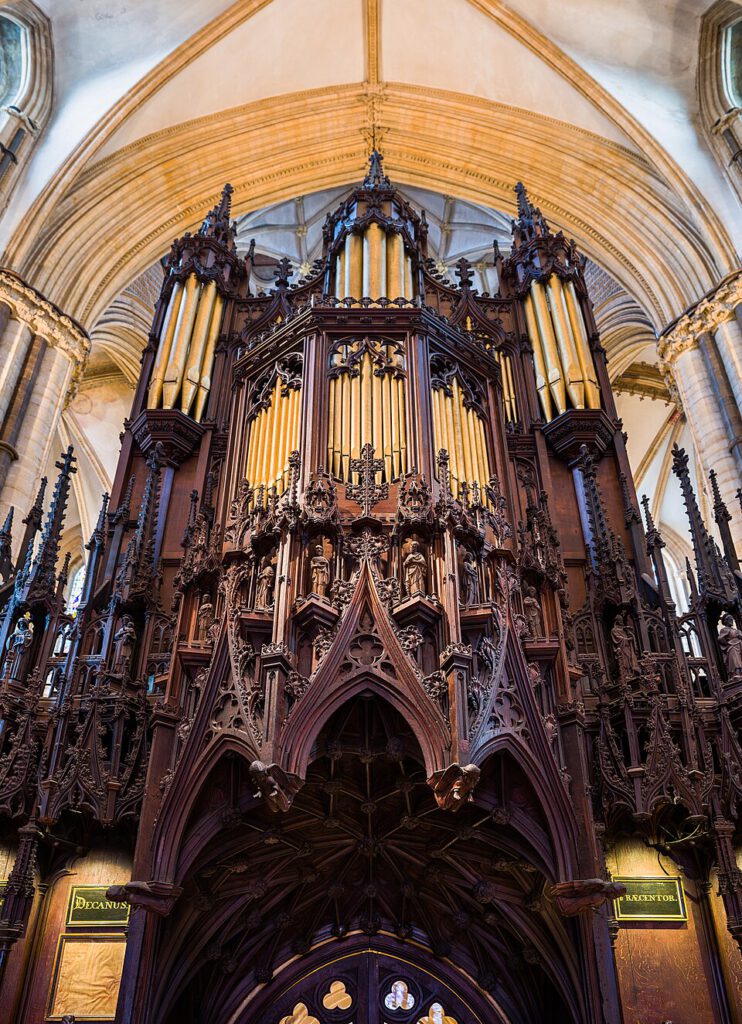
Image courtesy of David Iliff, CC BY-SA 3.0, via Wikimedia Commons.
From the tubas of that opening flourish we journey through every possible glorious combination of Willis registers, arriving at the granite-like chords which announce Stanford’s Fantasia and Toccata. My thoughts on programme balance could equally apply here – a weighty Fantasia coupled with a no-less-substantial Toccata? Actually it’s more balanced than it sounds, the Fantasia dissolving into quiet contemplation (a time of respite) before the vigorous Toccata kicks off. At the time I first heard this Lincoln recording, my only reference for this Stanford was Keith John’s performance a few years earlier from Gloucester Cathedral, volume 26 of Priory Records’ Great European Organs series. It was (and is) an exhilarating performance on the classically inspired 1971 Hill, Norman and Beard organ at Gloucester (now replaced) – but a sound world, and interpretation, that would have been quite alien to its composer. How relieved I was, then, to get this Lincoln recording illustrating the Fantasia and Toccata as Stanford would have certainly heard it in his lifetime. I find myself torn a little…because it hasn’t got the exhilaration that Keith John injects, but its more ‘correct’. Which is right, I wonder? (As pointless a consideration as which Willis is the best!).
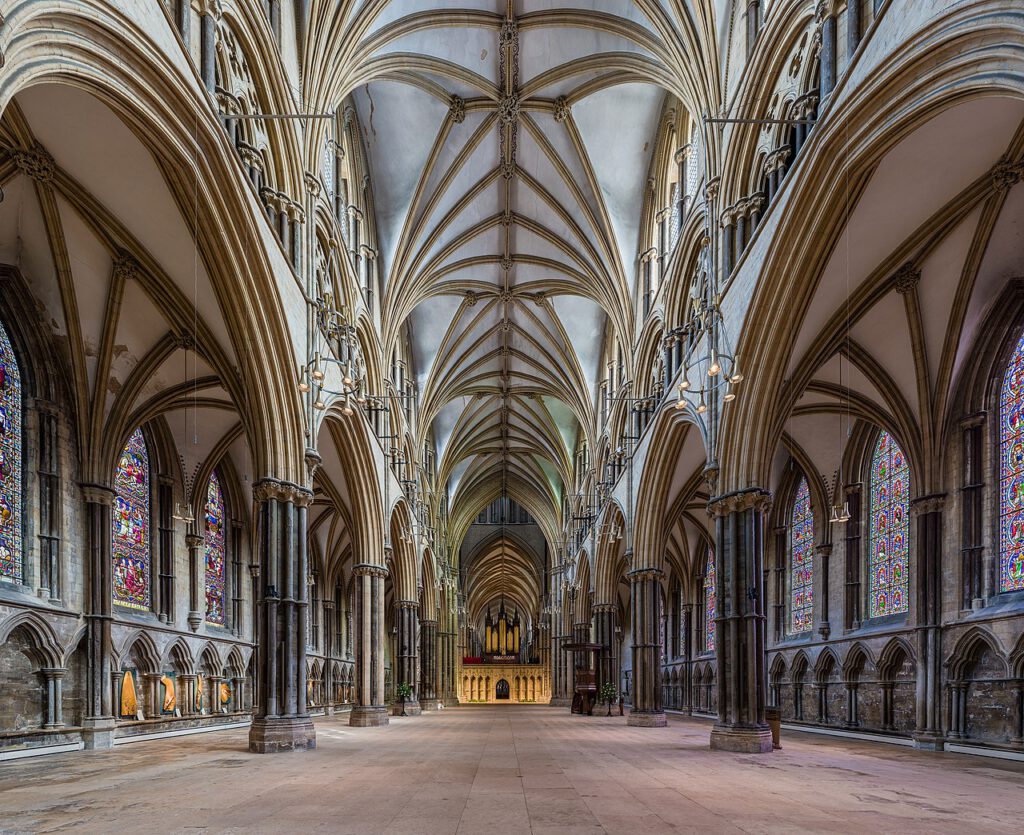
Image courtesy of David Iliff, CC BY-SA 3.0, via Wikimedia Commons.
Priory later got stuck into “complete” recordings…including Bridge, Dyson, Harris, Howells, Parry, Stanford, Sumsion, Vaughan Williams and Whitlock. As nice as each of these sets these are as a reference point, the question of balance raises its head again – if three fanfares by Bliss are one or two too many, perhaps 70+ minutes of a single composer is overkill. I’ve always wondered why combination complete sets aren’t made…the complete Howells, Parry and Stanford, for example, but mixed up and spread between the numerous discs that would be needed. Colin Walsh, with this English Organ Music album, eloquently gives that idea some credence – hearing the compositions of these various English masters is such a satisfying experience, and all the better for the blend of composers, compositions and styles.
I must admit that I don’t listen to this recording so frequently, but simply because there are so many other albums vying for attention. But whenever I do, I’m reminded just how perfect it is – there is consummate musicianship, the finest (?) Willis organ, and definitely “the best seat in the house” from Priory Records.