
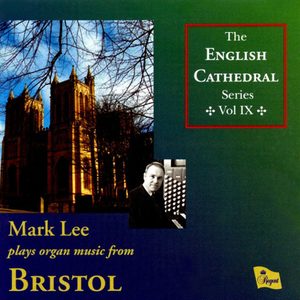
Album Details
The English Cathedral Series, Volume IX – Bristol
Mark Lee
Bristol Cathedral, UK
Regent Records (recorded 2004)
Album Contents
Introduction and Passacaglia — Walter Alcock
Sonata in C minor ❤ — Percy Whitlock
Rouen Processional (on Coelites Plaudant) — Clifford Harker
Evensong — John Easthope Martin
Imperial March, Op.32 — Edward Elgar
The Walker organ in Bristol Cathedral seems an unsung hero in the English organ scene. Not having Willis and/or Harrison & Harrison on its nameplate perhaps puts it at a slight disadvantage; and it doesn’t have the heft (in both number of stops and volume) to compete with the likes of organs in the cathedrals and abbeys of Durham, Liverpool, Norwich, Westminster and York. But ‘hero’ is the word, because this organ is glorious – to some extent restrained and refined, but with enough power behind it to stir when needed. There are a few recordings of it in the aeolodicon collection and this is one of my favourites, not least because it includes one of my fascinations, the Whitlock Sonata.
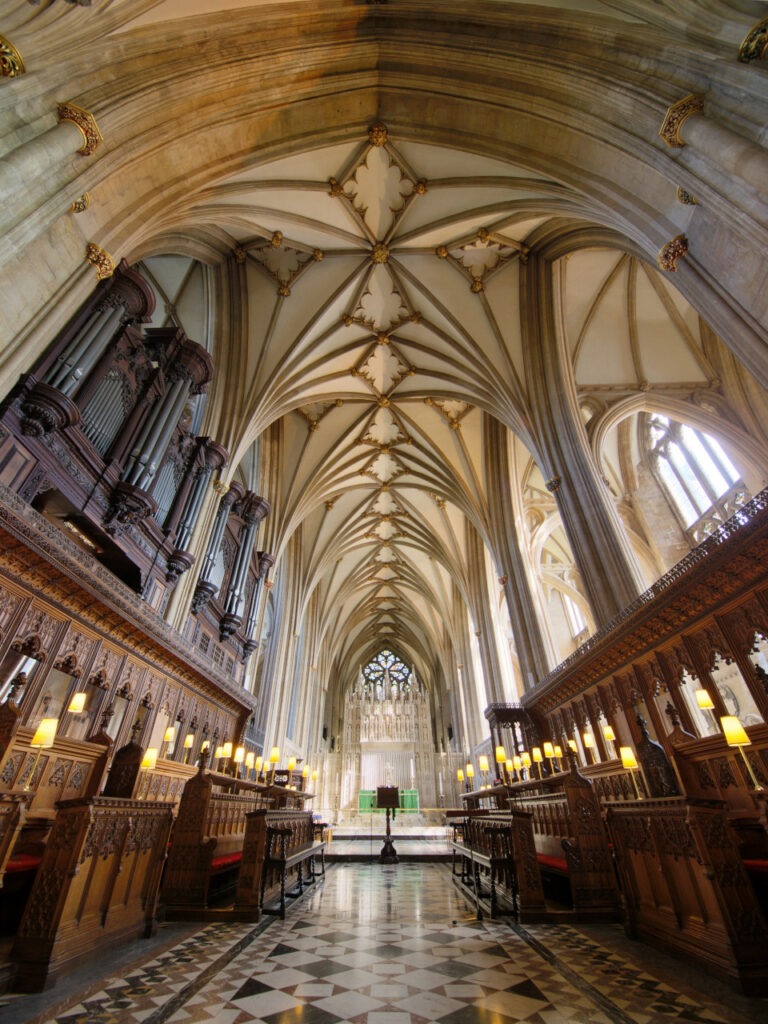
Image courtesy of Phil Burns, CC BY-NC-SA 2.0, via Flickr.
I, and I’m sure many others, think of this organ as a beautifully untouched 1907 Walker, but this isn’t quite true. The cathedral itself has medieval roots, consecrated in 1148. The remarkable “hall church” arrangement with full-height choir aisles adjoining the chancel is 14th century, but the nave was never completed. What work had been done was demolished at the Dissolution. The building was raised, naveless, to cathedral status in 1542. Completion didn’t happen until the late 19th century; the nave in 1877, and Pearson’s west front and towers in 1888. At this point, the existing organ, a 1861 three-manual 33-stop Vowles was inadequate for the expanded space. The history of this Vowles is not simple…Thomas Dallam built an organ in 1629; Renatus Harris was commissioned for a “fair great organ” to replace it (?) in 1682, and modifications were made by Seede, Smith, and Monday, before Vowles moved the organ from the rood screen to its current north chancel position, and expanded it significantly. This instrument had developed choruses, but only one sub-unison on the manuals, and a pedal division of just three flues.
In 1905 (many years after the cathedral’s structural completion) J.W.Walker and Sons was contracted to enlarge the organ; what resulted was the Walker we know and love today, albeit with minor modifications made by Walker in 1947 and 1970, and Mander in 1989, reflecting the change in tastes over the decades…Choir Clarinet gives way to a Cornet which gives way to a Sesquialtera (and most recently, the Clarinet has been added back in!); appearance and subsequent disappearance of a Swell 1′ Sifflet. All in all, though, the 1907 tonal essence remained, carefully preserved by Mander in their rebuild – a new Fourniture on the Great, to complement the original Walker Mixture, was the most significant addition at that time. It is this instrument, as left by Mander, that we hear on this 2004 recording. Since then, Harrisons have restored the organ (2025) with yet more minor changes, reversing some of the previous changes by Walker and Mander, but also adding something new (the short-lived Mander Fourniture now replaced with a Walker-style Sharp Mixture).
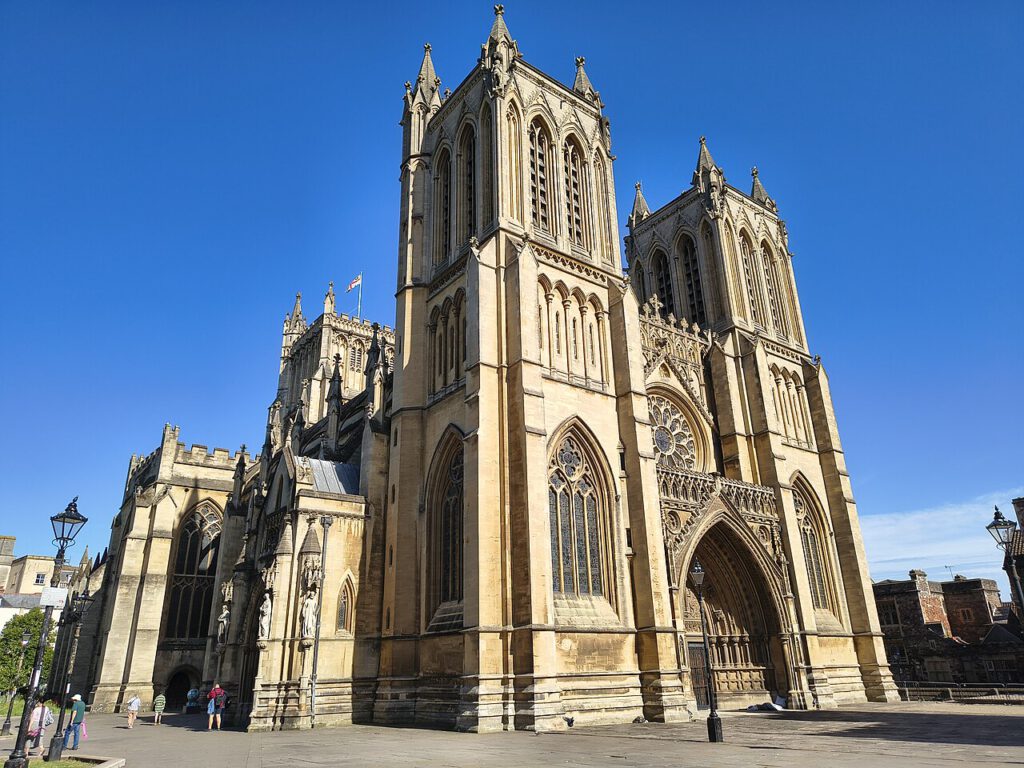
Image courtesy of HumanPerson254, CC BY 4.0, via Wikimedia Commons.
Thus, this ‘original Walker’ is not quite as pure a thoroughbred as that description would imply, but it was undeniably a Walker in 1907, and the core of rolling diapasons, colourful strings, and close-toned pepper-pot chorus reeds remains without significant change.
Who better to showcase this organ than Mark Lee, who will be stepping down as Director of Music at the end of 2026 after 28 years of service. This recording was made relatively early in this long tenure, but six years under his belt certainly ensured he knew every nuance and capability of this instrument. What we hear is an important snapshot of the great 1907 Walker in its post-Mander state, before the latest attempt to recover and conserve still more of its Edwardian character. Lee puts it through its paces with an all-English programme that is built around the mighty Whitlock Sonata (with a duration in excess of 40 minutes) – a nice touch is to have music by Clifford Harker, a previous organist at Bristol Cathedral and musical powerhouse within the city. Born in 1912 he studied at Durham University and the Royal College of Music, and after serving in the RAF during the Second World War worked for a few years as organist and teacher. A decisive appointment came in 1949 when he succeeded Alwyn Surplice at Bristol; this became his life’s work, for Harker spent the next 34 years at the musical helm, playing and hearing the Walker throughout this time.
The recital commences with Walter Alcock’s rousing Introduction and Passacaglia; the Walker Tromba injects sufficient bravura (NPOR notes the pipes are marked ‘tuba’) but also brings me back to my comment of this instrument being restrained and refined. I often find myself wondering if just a little more wouldn’t be beneficial, but actually wanting a touch more is no bad thing, and it’s what makes this organ so satisfying. The bombastic tubas of Durham, fiery Bombarde reeds at Westminster Abbey, or ‘that’ Tuba Mirabilis in York seem really quite vulgar in comparison! The Walker’s solid tone, colourful strings and rich reeds all come to the fore in the first few minutes of this piece. What is also firmly in the foreground is the click-clack of the tubular pneumatic action – I’ve written elsewhere on aeolodicon about the pleasure that noises off can give, rooting a recording to real life. The noisy Bristol action seems such a characteristic part of this Walker that I’m unsure what I’ll think when I hear a post-2025 recording; Harrison’s latest work has seen the action converted to electro-pneumatic.
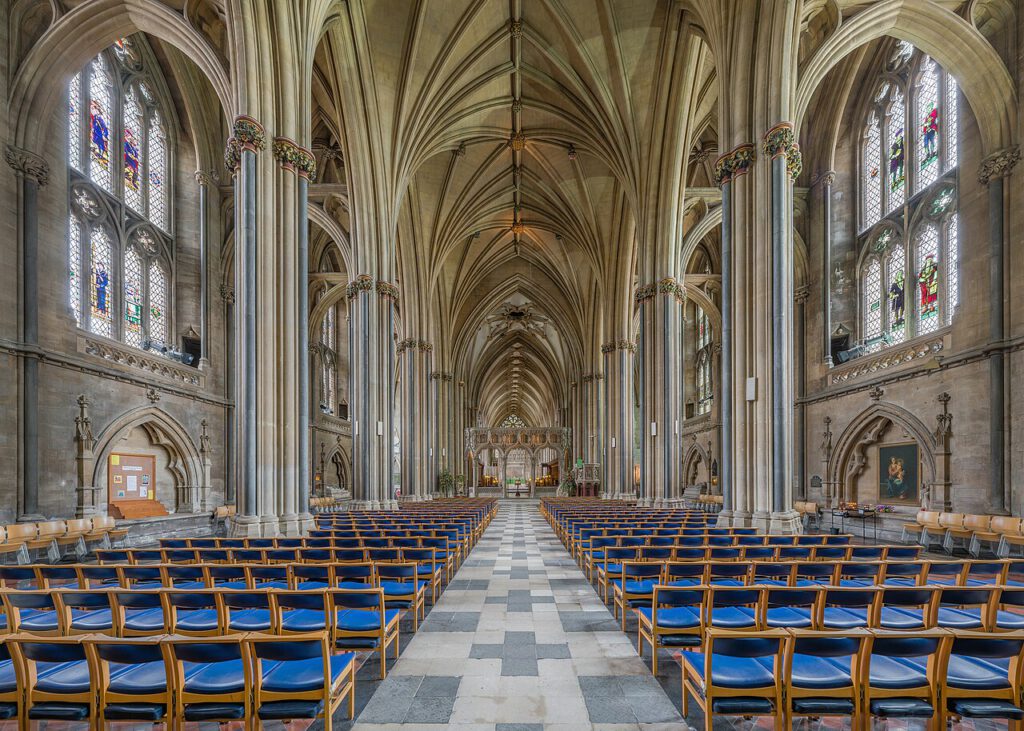
Image courtesy of Diliff, CC BY-SA 3.0, via Wikimedia Commons.
The Whitlock is the heart of this recital; the opening chordal fanfare motif sets the scene, with rich reeds throttled behind Swell shades before being set against the Great chorus with its almost ponderous diapasons countered with just enough edge from the upperwork. Mark Lee gives the music a great sense of drive as it builds and subsides, and the solemnity of the first Tromba (Tuba) exclamation is perfectly paced. From here, we experience every possible delight of the Walker organ. Gentle Choir flues, Great diapason richly sounding forth in the tenor, Solo Clarinet for the second theme, and the delightfully delicate Swell strings (with the box closed there’s more action noise than string…magical again!). The Canzona offers a moment of calm after the opening movement’s sturm und drang, ending pianissimo, and then we have the classic Whitlockian sunshine of the rhythmically challenging Scherzetto – Lee’s nimble fingers are in perfect control. The concluding Choral is simply magnificent music, Whitlock at his grandest, and again the Bristol organ driven by Mark Lee fits it like a glove. Sometimes I miss the monumental grandeur that Scott evokes from the St Paul’s Cathedral Willis or the crisp tonal contrasts that Battiwalla pulls from the Rochdale Binns with its much keener strings, but this Walker, with its restrained grandeur and more subtle colours, is as convincing as it is different. The final minute or two, slowly fading from the dramatic sweep of the Tromba is beautiful. And yes, the click-clack is ever present in those final hushed chords.
Any sense of calm is quickly dispelled in Harker’s Rouen Processional (on Coelites Plaudant). There are some forty organ works published by Harker, the first from the mid-1930s before his appointment to Bristol, but with most coming from his time at the Cathedral. The Processional is his last published work, dating from 1976 as he approached his third decade at Bristol – its a grand ceremonial exploration of a melody in the 1728 Rouen Antiphoner which entered mainstream English use through its inclusion by Vaughan Williams in the 1906 English Hymnal. It has an improvisatory feel to it, starting with a grand declamation of the opening line.
Midlands-born John Easthope Martin worked extensively as an organist (employed by the Aeolian Organ Company as an organist, pianolist and demonstrator) and a composer, but oddly only set down a single work for the instrument, the charming Evensong heard here. Despite it’s liturgical title, it seems closer to the Edwardian drawing room or theatre than the cathedral organ loft – the sweeping melody gives plenty of opportunity to hear solo reeds, orchestral flutes and strings, all of which the Bristol Walker offers with sublime delicacy.
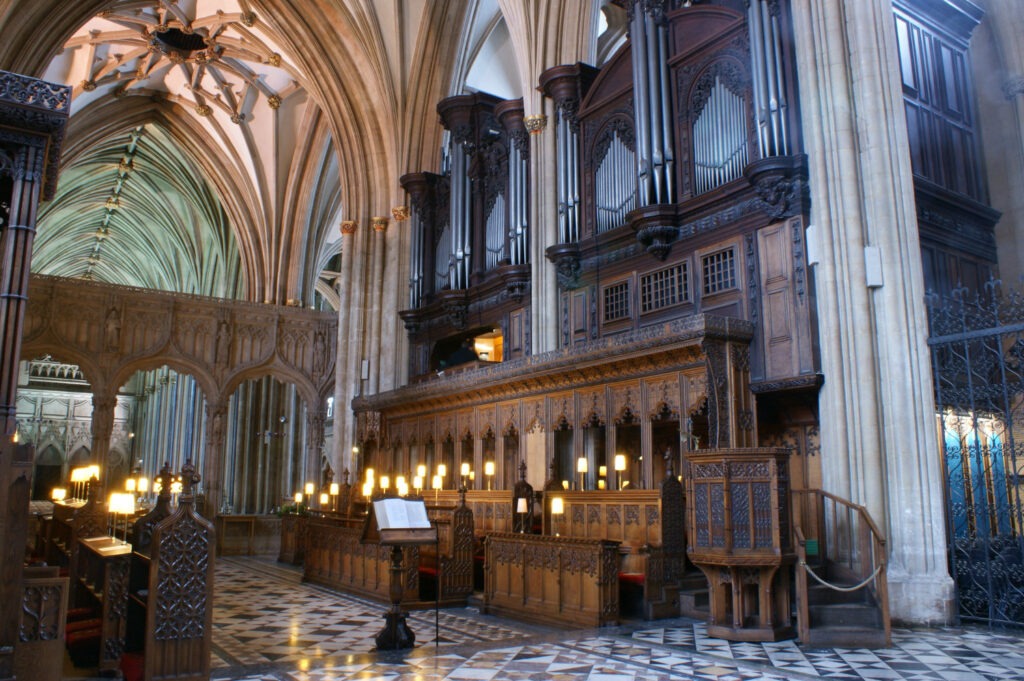
Image courtesy of Bristol Tourist, CC BY-NC 2.0, via Flickr.
Mark Lee brings the programme to a stirring conclusion with Elgar’s Imperial March, in the well-used arrangement by Sir George Martin (1844-1916), organist at St Paul’s Cathedral, London. The march, written to celebrate Queen Victoria’s Diamond Jubilee in 1897, has the familiar Elgarian hallmarks, pairing dotted rhythms with nobilmente dignity. The Walker’s weighty diapasons and rich reed choruses are perfectly at home in this archetypal English music. Mark Lee delivers an uplifting performance, a perfect conclusion to a most enjoyable album on what is surely an under-rated cathedral organ.