Album Details
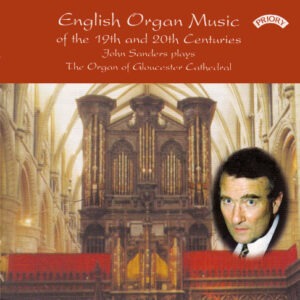
English Organ Music of the 19th and 20th Centuries
John Sanders
Gloucester Cathedral, UK
Priory Records (recorded 1988)
Album Contents
Sonata No.1 in C sharp minor, Op.5 — Basil Harwood
Carol (from Suite for Viola and Small Orchestra) — Ralph Vaughan Williams
Rhapsody No.1, Op.17 — Herbert Howells
Two Dialogues — Peter Hurford
Soliloquy — John Sanders
Adagio (from Three Pieces) — Frank Bridge
Introduction, Chorale and Fugue, Op.16 — Francis Jackson
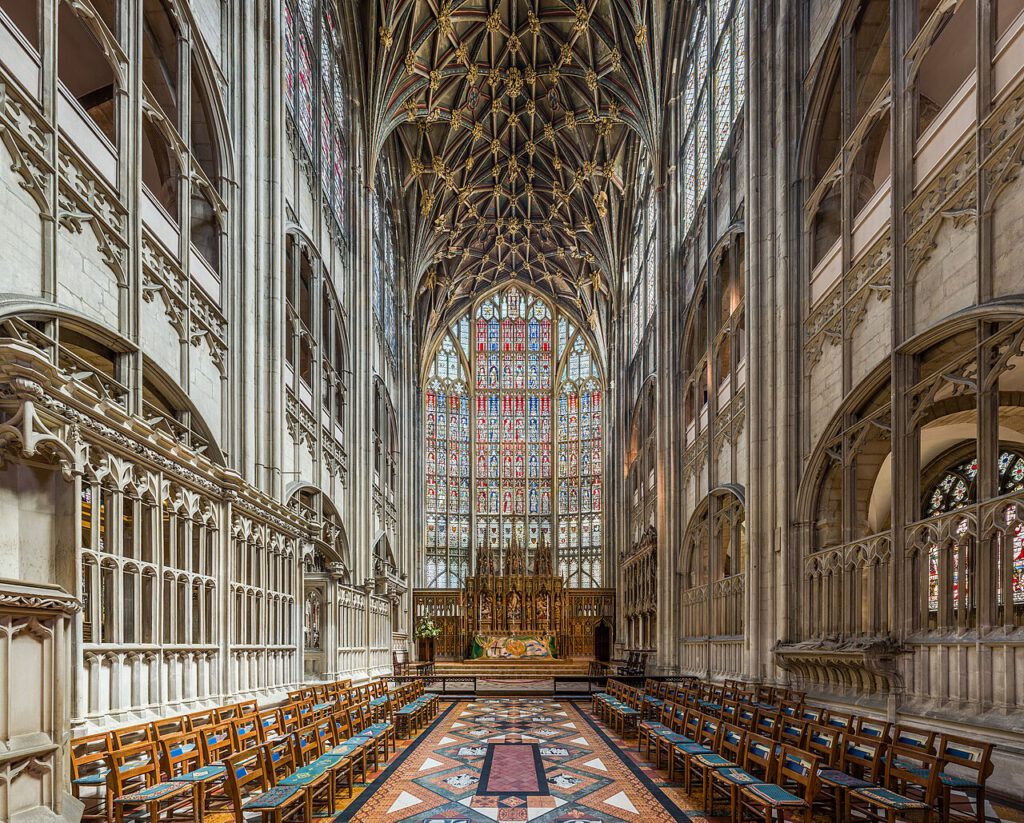
Image courtesy of David Iliff, CC BY-SA 3.0, via Wikimedia Commons.
How tastes change! In 1965 EMI’s legendary “Great Cathedral Organs” series visited Gloucester Cathedral to record Herbert Sumsion on the “Willis” organ – not a thoroughbred by any means. This was Father Henry Willis’s first cathedral organ in 1847, based on an existing instrument with mixed roots – but he subsequently enlarged it in 1879, 1889, 1899 and 1910. Under Herbert Brewer the organ was given a richer orchestral character with Harrisons at the helm in 1920, and it is this instrument heard (albeit with subsequent re-pitching in 1947) on the EMI GCO vinyl. By the late 1960s an overhaul was necessary, and a different direction was taken by Hill, Norman and Beard, with John Sanders supervising with expert guidance from Ralph Downes. The aim, according to Sanders’ liner notes for this Priory recording, was two fold. Firstly, to return the 16th and 17th century casework to more appropriate proportions, removing the pipework excrescence necessitated by numerous enlargements over the years. Secondly, to return to a “purer, more traditional sound” with the historic façade pipes returned to speech and the whole organ contained within the case. The resulting instrument, an interesting juxtaposition (or should that be clash!) between the Organ Reform and the demands of Anglican cathedral liturgy, built on Downes’ controversial Royal Festival Hall concept, and joined other organs with radical new voices, for example, Blackburn Cathedral (1969), the London Oratory (1954), and Coventry Cathedral (1962). Somehow what happened at Gloucester seems particularly brave, using the 17th century roots of the organ as its inspiration – those other radical instruments could be their own thing, but Gloucester had a heritage to maintain too.
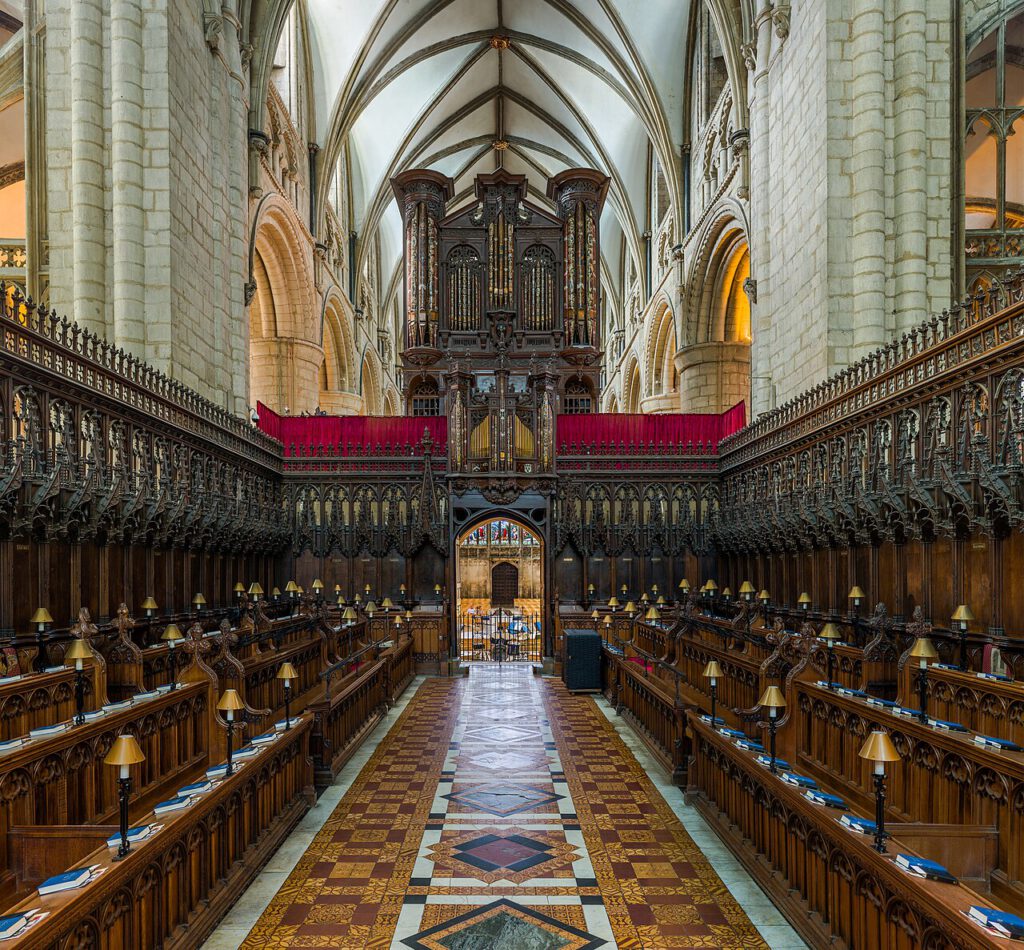
Image courtesy of David Iliff, CC BY-SA 3.0, via Wikimedia Commons.
The HNB instrument was unveiled in 1971, a fresh voice for a young decade. It’s tautly focused sound (fully encased) with bright choruses and fiery reeds gave an impression of volume, but from the get go it struggled to reach the length of the church, particularly for the many grand events which are part and parcel of a cathedral’s calendar. In 1999, as maintenance became essential, a series of adjustments commenced – the top of the organ case was removed, allowing the sound free exit followed by reflection of the stone vaulting above; and then additions of a half-length 32′ pedal reed, pedal mutations (reinforcing the depth through 32′ harmonics) and, finally, in 2010, a loud Trompette Harmonique.
Fast forward to today, and an essentially new organ (this time from Nicholsons) sits within the case – 91 stops (compared with just 55 in 1971), rich foundations, orchestral reeds (and a mighty Tuba Mirabilis), judicious use of extension and borrowings, two 32′ polyphones and a synthetic 32′ Aliquot. A very different beast, but some fresh ideas from 1971 have been retained – the organ case has a roof again, and the success of having chests oriented to deliver sound out to the west is replicated with a dedicated west-facing Nave division. How tastes change!
This rather long preamble is by way of setting the scene for this 1988 recording of that 1971 HNB. It was first released as a cassette, which is when I first heard it – and it left my collection when I switched to CDs in the early 1990s. However, Priory re-released the recording in 2004 in memory of Sanders, who died in December 2003, and I was delighted to reacquaint myself. That cassette recording was an eye-opener for me at the time – in those early days of my collecting recordings it was a programme of music all new to me, yes, even the Harwood sonata, a veritable war horse these days! And how fascinating to hear compositions by three famed organists (Peter Hurford and Francis Jackson, in addition to John Sanders). Revisiting the recording some 30 years later has been interesting – how fickle memories are!
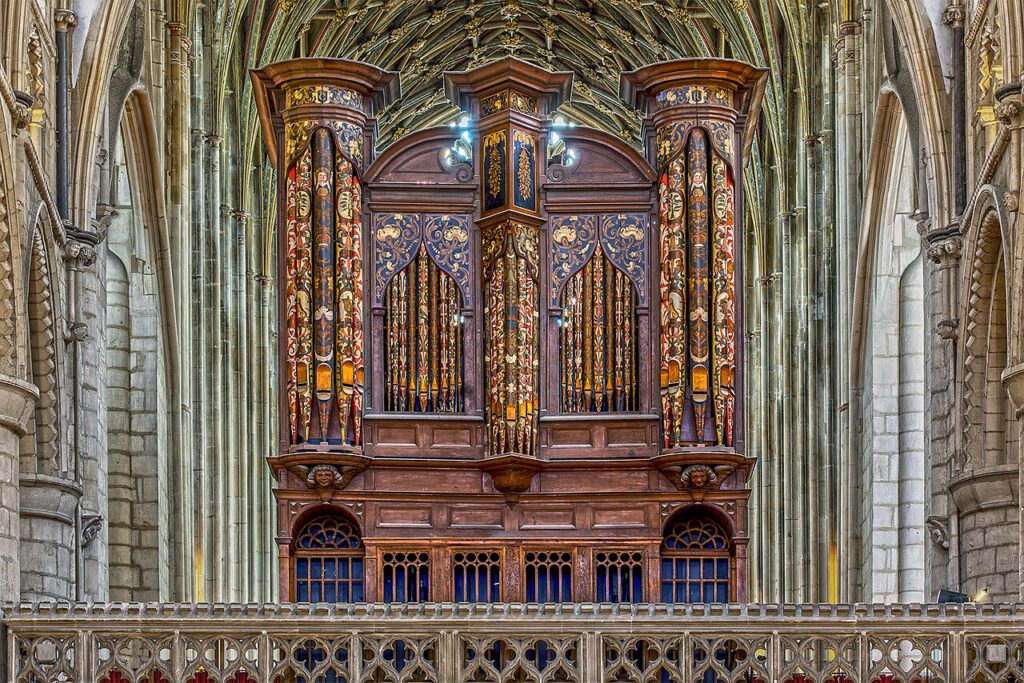
Image courtesy of David James, CC BY-SA 4.0, via Wikimedia Commons.
Over the years since this recording, Priory released several other discs from Gloucester, particularly in the David Briggs era (1994-2002), but many of these were on the organ after the interventions by Nicholsons in 1999 and after. This release, then, captures the organ in its original concept, and who better to be performing than the cathedral organist under whose guidance that concept was devised. I had memories from those cassette days of a refined, taut sound, so was quite surprised on revisiting with the CD at the bright (almost rough) edge the mixtures had, and the somewhat aggressive chorus reeds – I should be clear, this is not a criticism, for it is all very exciting, but it was quite different from what I was expecting. It really must have made quite an impression in 1971 when unveiled in recital. A world apart from the previous ‘orchestral’ Willis/Harrison.
There is also much of beauty within the organ, beyond the visceral excitement of the louder ensembles. One memory that remained true was of the glorious Swell strings ethereally phrasing the harmonised Beata nobis gaudia plainsong at the end of the Harwood sonata – a tranquil moment quickly dispelled with a fortissimo repeat! The Vaughan Williams Carol also explores these quieter registers, and the organ does deliver something very beautiful, with the sound riding the warm acoustic – there is a slight edge to some of the flutes, a little chiff here and there too, but they meld together very well. The same quiet registers also work beautifully in the hushed opening of the Howells Rhapsody No.1, but as the work builds to its archetypal Howellsian climax the brilliant mixtures and fiery reeds sound rather out of place (and a little out of tune too!) – the closing bars accentuate again, pianissimo, how this is a very different sound world from what had gone before at Gloucester. I reflect, though, that Howells was active as a composer as this organ was unleashed on the world in 1971, so to even infer its not suitable for his music may be foolish – the counter argument is that this Rhapsody was created just a year or two before Harrisons’ 1920 work on the Gloucester, so in a very different time before thoughts of organ reform and the ‘classical’ organ were really a thing. Interesting, the same piece was chosen by Herbert Sumsion for his EMI GCO mentioned at the start of this post – was Sanders including it deliberately for comparison?
The two Hurford Dialogues are delightfully spirited miniatures, tonal but with a dash of 20th century spice – they work perfectly with the clarity the Gloucester organ. Sanders’ own Soliloquy was written as a contribution to an album of new works celebrating Cecil Adams’ 40 years as organist at Dursley Parish Church (15 or 20 miles south of Gloucester). It is based on two musical themes, CECADA (recognising the honoree) and BACEGG (reflecting Adams’ love of cooking, including bacon and eggs), exploring various moods and registrations.
After the Bridge Adagio in E major (note: the Priory CD has this misplaced in the running order compared with the liner notes, interchanged with the Vaughan Williams Carol), which feels out of place, Francis Jackson’s Introduction, Chorale and Fugue provides a fitting conclusion to the programme. I have mixed reactions to Jackson’s music, but some of it does appeal, and this substantial tripartite composition is one of my favourites. It feels so fresh and energetic I find it hard to believe that it dates from 1955, nearly 30 years prior to this recording, and many years before the Gloucester organ heard here came into existence. It fits the organ perfectly – the declamatory opening (Maestoso e pesante) thunders out on those fiery, untamed reeds, the writing including all the space needed for the sound to bounce around the cathedral’s reverberant interior. The calm Chorale benefits from the soothing, light flutes and strings, before the vibrant fuller ensembles deliver a thrilling fugal conclusion.
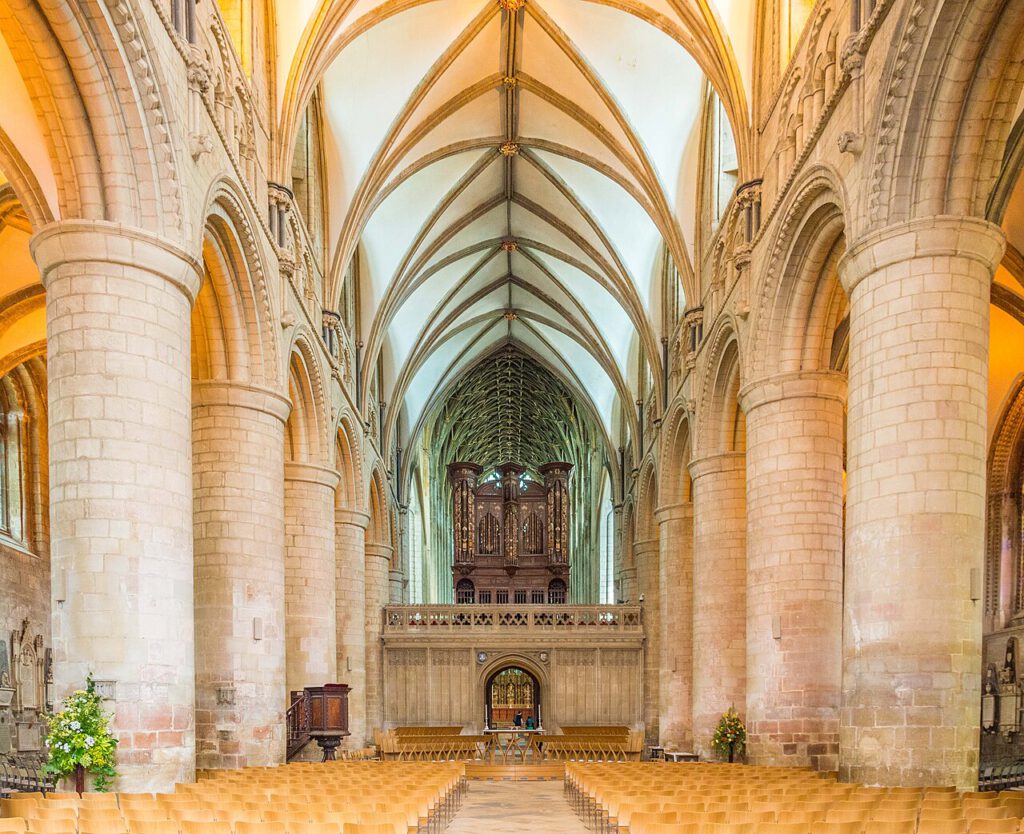
Image courtesy of Jack Pease Photography, CC BY 2.0, via Wikimedia Commons.
This is a lovely testament to a talented organist, choir director and composer, one who didn’t record so much as a soloist. The programme is well crafted, and really puts the 1971 HNB instrument through its paces. It is possible that the thinking behind this particular instrument didn’t succeed in its aims to be that historically inspired, modern organ fit for a 20th century Anglican cathedral, but as a solo instrument in a stunning venue, it really is something very special. Only time will tell what musical mark the new 2026 instrument by Nicholson will make, and when the first re-work to address deficiencies and/or changes in taste will be necessary!