
Harry Huff
Calvary Episcopal Church, Gramercy Park, New York City, NY, USA
Pro Organo
There are some recordings which, when graced with a rare play, surprise me in some way…a blast from the past perhaps or the realisation / recollection of a hidden gem. This interesting Pro Organo recording of music by the American organist and composer Calvin Hampton did just that – it caught my eye as a scrolled through the many hundreds of albums on my tablet looking for something to fill a half-hour listening slot before yet another online work meeting. The 25-minute Alexander Variations stared back at me as I looked at the track list. It’s odd, isn’t it, that all the memories are there, but until I saw that name it was as if I had no knowledge of the work at all. But those two words immediately brought back the excitement and variety that Hampton packs into this work for two organists at two organs/consoles. I pressed play, and it all came flooding back.
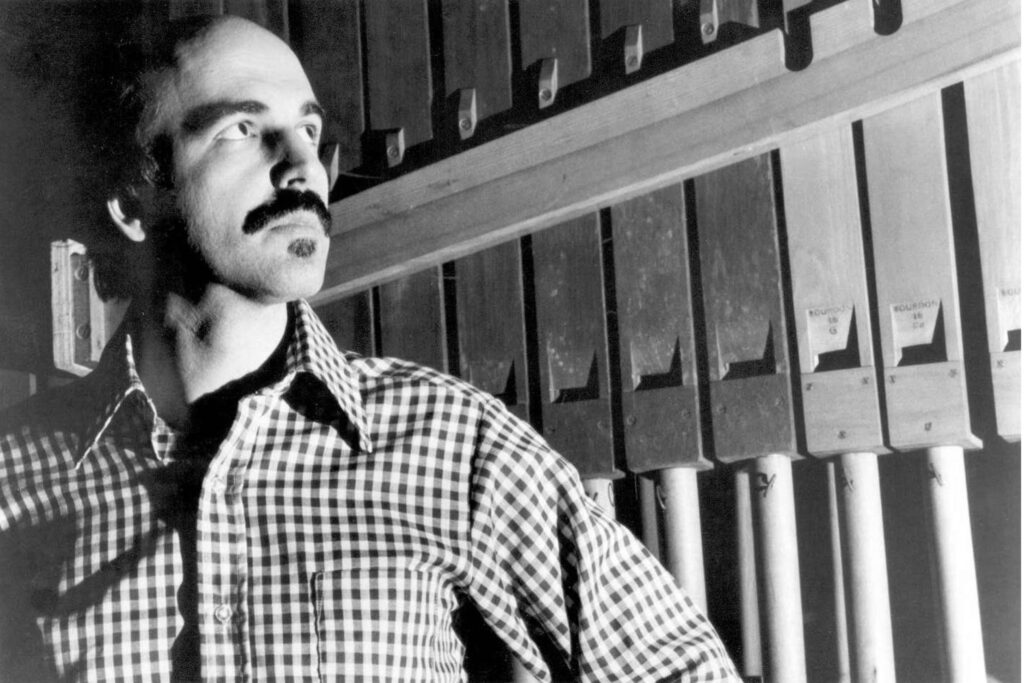
Calvin Hampton (1938-1984) studied at the Oberlin Conservatory and Syracuse University, and from 1963 spent 20 years as organist and choirmaster at Calvary Episcopal Church in Manhattan’s Gramercy Park neighbourhood. His “Fridays at Midnight” series of organ recitals through the 1970s and 80s, breaking traditional recital norms with theatrical lighting and the audience encouraged to lie down to listen. At a time when historically informed performance was burgeoning, Hampton wasn’t afraid to continue with orchestral transcriptions (he’s noted for his organ versions of César Franck’s Symphonie en ré mineur and Modest Mussorgski’s Pictures at an Exhibition) but also happily placed Bach’s music as the centrepiece of many of his own recitals.
As a composer, he writes stylistically, recognisably as Calvin Hampton. I think this particular recording was my second with his music. An earlier recording by Cherry Rhodes of Hampton’s Five Dances and Prelude and Variations on “Old Hundredth” had already alerted me to something unique – music that is harmonically and rhythmically daring without breaking down into brutalist modernity. Cherry Rhodes performed on an uncompromising (but beautiful) substantial 1983 Visser-Rowland at the University of Texas in Austin – it had bright choruses, numerous mutations, colourful reeds and a battery of horizontal trumpets; this organ seemed an ideal partner for Hampton’s quirky music, where odd melodies are accompanied by pulsing motifs. The organ for this “In Praise of Humanity” recording is quite a different beast – but its the one with which Hampton was well acquainted, ‘his’ instrument at Gramercy Park.
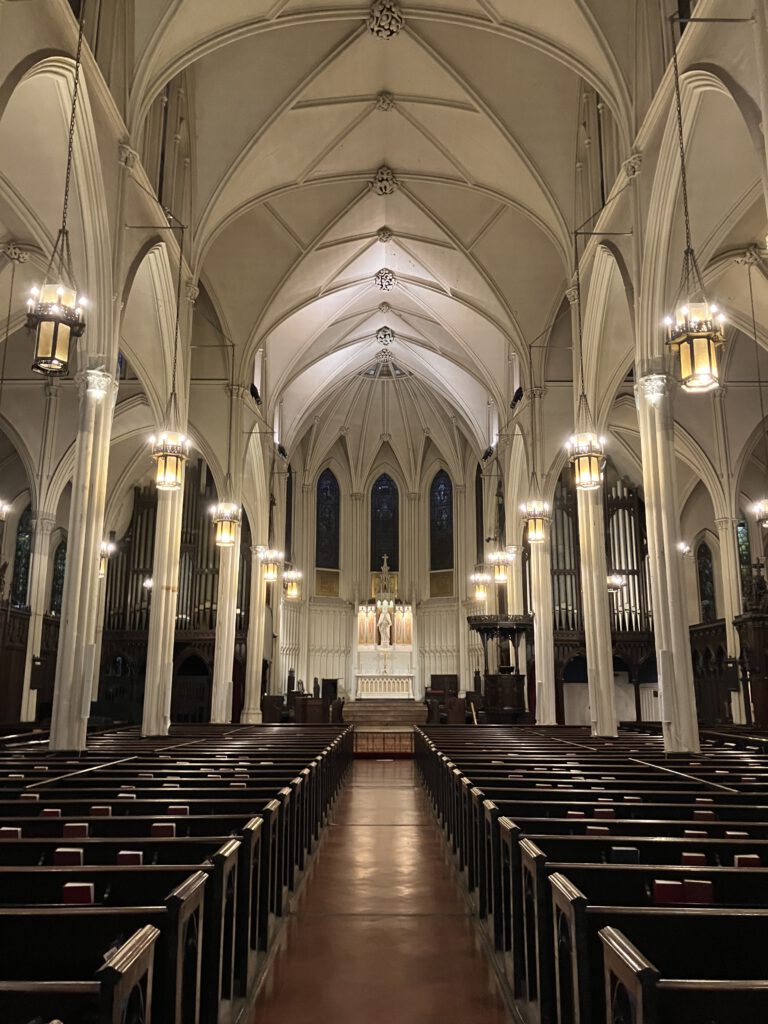
Schedukiam, CC0, via Wikimedia Commons
At its heart is a 1936 Aeolian-Skinner (Opus 945), designed and finished by G. Donald Harrison; this was essentially a new organ, but did take in a few ranks from the former Skinner (1907), itself a reworking of an 1885 Roosevelt. The 1936 specification is quite typical for the time – developed choruses, significant mutations, and bright reeds juxtaposed with lush strings and orchestral voices. During Hampton’s tenure at Calvary Church various modifications were made by organ curator Randolph Gilberti with Hampton’s involvement and agreement. There was some ‘modernisation’ with original ranks being switched (or revoiced) to the likes of Cymbel, Spanish Trumpet and Krummhorn, and a general thinning of textures, as seen in the 1983 specification. A significant addition was the west end Gallery organ, prepared for in the 1936 instrument. As the accompanying photograph attests, function clearly outweighed aesthetics! It sounds, not unexpectedly, as the specification would suggest – sometimes brilliantly bombastic (almost over the top in the modest acoustic of Calvary Church), at other times alive with lush romanticism. I wonder whether, despite its obvious Hampton link, whether this is the most appropriate instrument for this idiosyncratic music, but it makes a good case, and contributes to an enjoyable composer portrait.
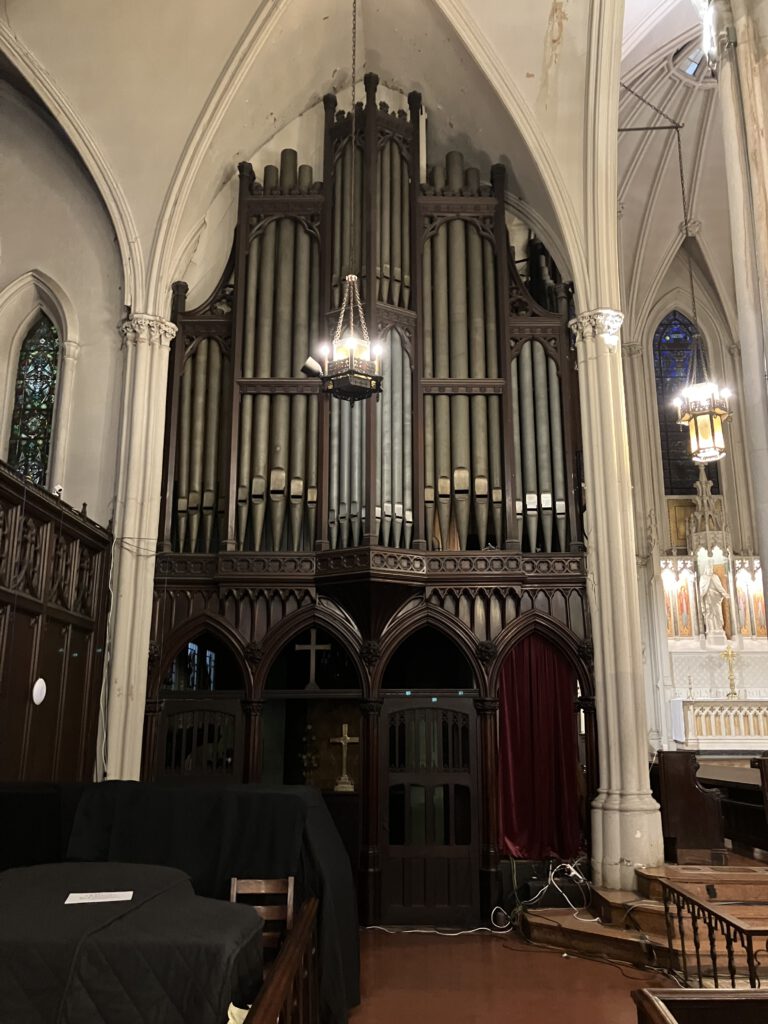
Schedukiam, CC0, via Wikimedia Commons
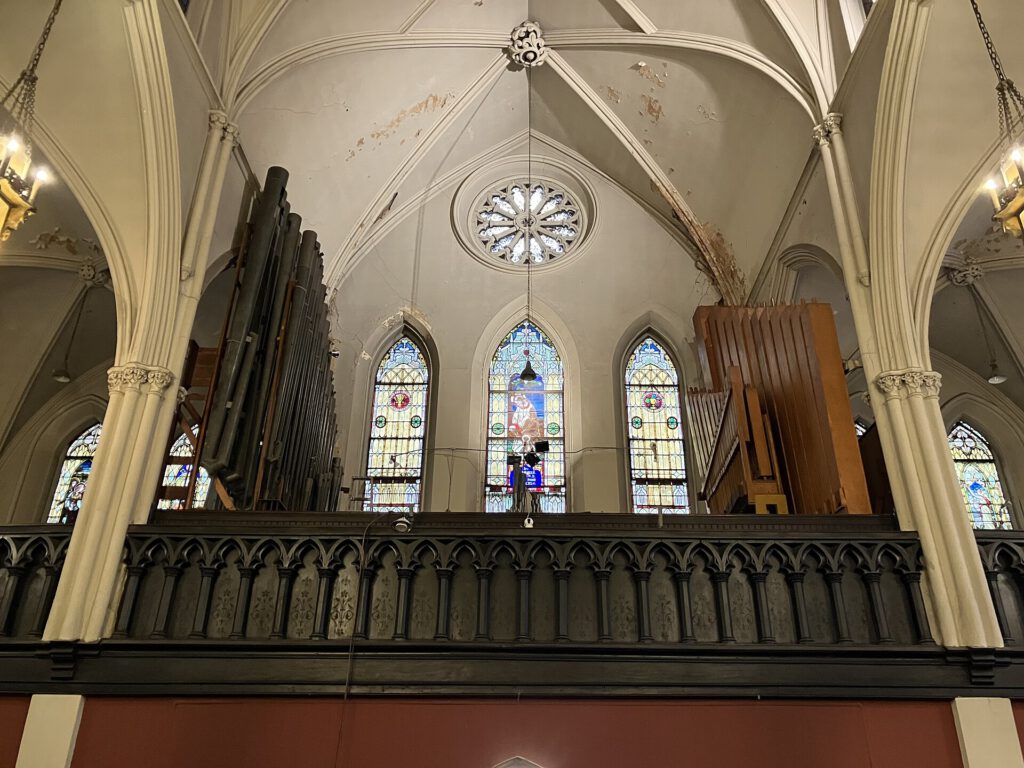
Schedukiam, CC0, via Wikimedia Commons
The Alexander Variations, which gave rise to this post, were written for a commission from Grace Cathedral, San Francisco, seeking a celebratory composition for the fiftieth anniversary of its main organ, donated by the Alexander family. Apparently Calvin Hampton composed it on a small electronic ‘rock’ organ without pedals, and its a testament to his skill and vision that the end result works so well. It was originally intended for performance with a ‘large’ organ and a small positive instrument (the second part needing no pedals). Alas, Calvin Hampton died shortly after completing the variations, and never heard them performed. The two performers here, Harry Huff (Hampton’s assistant and successor at Calvary) and David Higgs, gave the work’s premiere at Trinity Church, New York, and performed the variations again in Calvary Church in celebration of what would have been Calvin Hampton’s fiftieth birthday on 31st December 1988.
From the get go, the variations grab your attention; a bold fanfare-like opening is tossed between the two organs (on this recording the work is a dialogue between the three manuals of the main east end organ and the single manual Gallery organ). When the theme arrives, its a toe-tappingly joyful affair…this, with the bombastic opening, is the recollection or forgotten joy that inspired this post. Thereafter the variations explore many different moods and timbres – through much of the music the ‘two organs’ are played separately, in dialogue from variation to variation. Only occasionally do you hear both organs together. It captures the spirit that is present too in the substantial Five Dances and the “Old Hundredth” – infectiously fun, rhythmically adventurous, and highly colourful. Fabulous stuff!
Other works on the recording include the haunting Lullaby (originating from a rock piece, “Lullaby for the End of Time”), a Messiaen inspired (loosely, in my view) In paradisum and a Voluntary on Engelberg, originating from an improvised postlude at an American Guild of Organists event – Hampton wrote the voluntary down and offered it as a souvenir to the event participants. The Variations steal the show for me, but the whole recording provides fitting insight and memory of an inspired musician and composer.