

John Scott
St Paul’s Cathedral London
Hyperion CDA67470
John Scott possessed a rare humble musicianship which coupled phenomenal technique with exquisite sensitivity. This 2004 recording of music by Whitlock on the mighty organ of St Paul’s Cathedral, London, was his last before his move, just a few months later, to St Thomas’s Church, Fifth Avenue, New York, where he curated the significant music programme until his untimely passing in 2015. What an incredible final testament of an extraordinary musician.
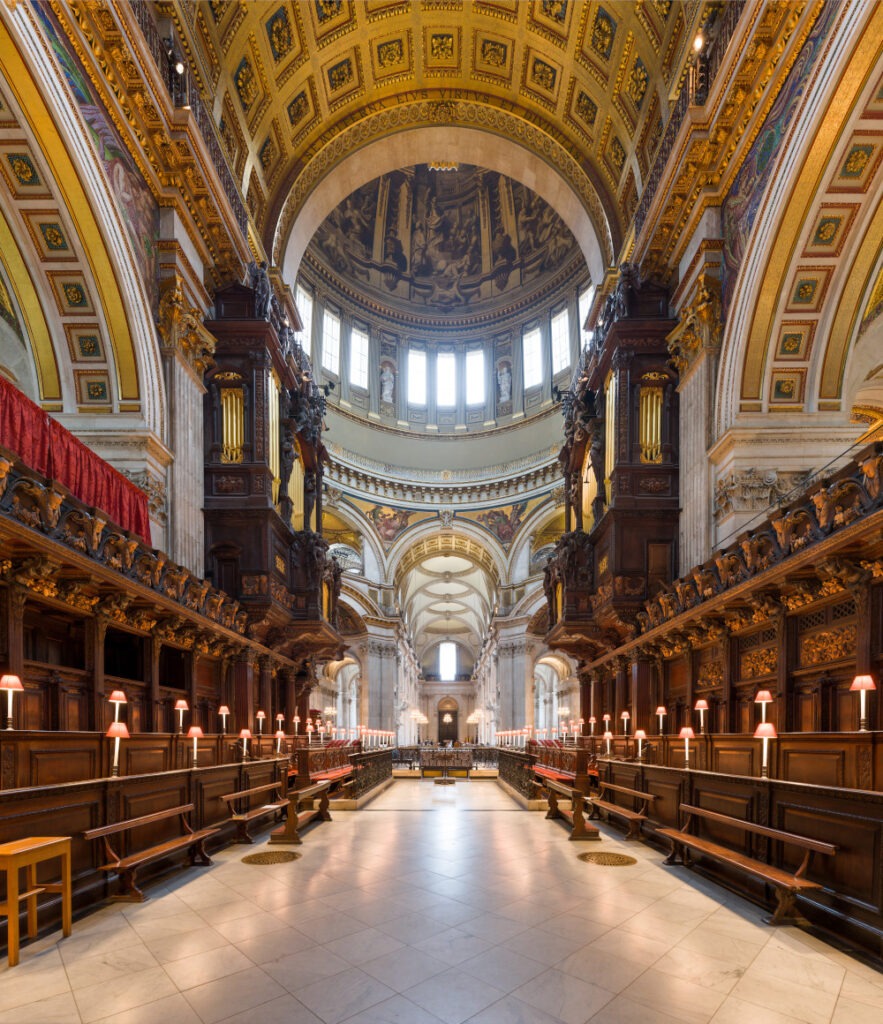
Whitlock’s organ music was writ large, even the shorter works in the Plymouth Suite or Five Short Pieces – some of them have an intimate feel, but nonetheless they seem music on a grand, expansive canvas…just think of the orchestral colours, directions for three or four manuals and tuba flourishes. Yes, the ‘small’ pieces can work on a more typical parish church organ, but they comfortably fit on larger instruments. And there are few organs to compete with that in St Paul’s for scope and capability. In today’s (German?) parlance, the St Paul’s instrument is an ‘organ system’ – a self-contained four-manual chancel organ, complemented by the Dome diapasons with tuba battery, and topped with West end chorus and “those” Royal Trumpets (of which it is said the late Queen was not so keen!). Wrap this all in the spacious 11-second acoustic, and you have something quite magical at the hands of someone, like Scott, who knows how to let the music still speak fully. The success is, to some extent, in spite of the acoustic and the scattered ‘system’ of pipes here, there and everywhere.
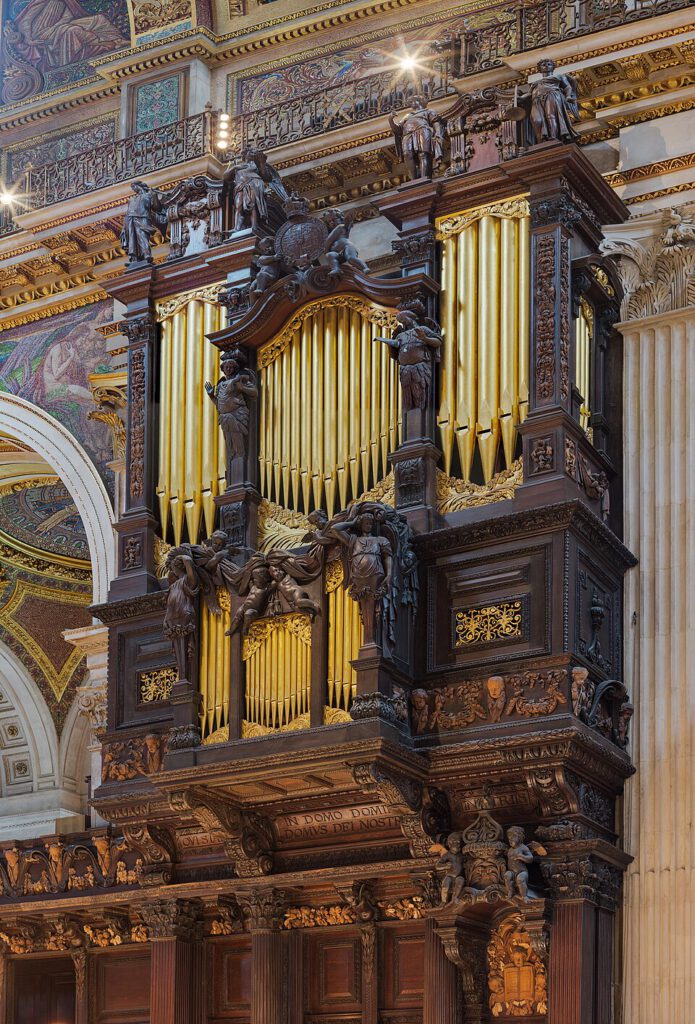
It’s hard to know how much the microphone placement contributes to the success of this recording – of course it does but how much is this recording dependent on the placement. I suppose the recording engineer would comment “totally”. I’ve heard the St Paul’s organ only a few times in the building – Messiaen’s Joie et clarté des Corps Glorieux at the hands of Jennifer Bate, with the spine-tingling Trompette Militaire shining forth, remains firmly emblazoned in my memory, even 30-or-so years on! It is clearly a challenging space, such that even Priory Records, who pride themselves on a single stereo microphone to capture “the best seat in the house” as an individual would experience it, resorted to two microphones at St Paul’s to ensure the chancel pedal still made itself known. I don’t know how the Hyperion recording engineers positioned their microphones, but the result seems honest – the sounds wash around luxuriously, but the quieter registers are present, the tubas are staggeringly impactful, and the 32′ registers rumble and roar without shyness. It really does sound glorious.
Let’s return to the music. Many would consider Whitlock a miniaturist, but on this disc we have one of my fascinations, the substantial Sonata in C minor, clocking in at a 45-minute typical duration. It’s not a sonata in the classical sense, but a broader Romantic symphonic essay, one that is oddly balanced. The two outer movements (Grave-Animato and Choral) contribute three quarters of the content, the remainder succinctly captured in the two short inner movements (the “song without words” Canzona and a flighty Scherzetto). All four movements can stand happily on their own, whether as substantial symphonic statements or charming miniatures. When listening to the Sonata as a whole, the Canzona and Scherzetto feel quite inconsequential, adding little to the impassioned Grave-Animato which has gone before, and just delaying the grandeur of the Choral that is to come. If anything, I suppose they offer a breath of fresh air between two more serious musical reflections. Perhaps this reflects exactly what the Sonata is – a mix of styles and inspiration, ranging from Rachmaninov and Delius, through to the light music of the Bournemouth Pavilion where Whitlock was organist for many years. This sums up rather neatly the composer himself – a serious, powerful classical composer, and an infectious musical entertainer.
For me this recording of the Whitlock Sonata cannot be bettered, and it acts as my reference by which all others are judged. Everything is perfectly judged by John Scott – the music flows and arcs beautifully; the filigree Scherzetto is delicately articulated; and the impassioned climaxes and declamatory tuba statements are carefully, beautifully, ‘placed’ within the wash of sound that Wren’s cathedral creates.
John Scott applies the same artistic care and consideration to the Five Short Pieces and the poetic first Fantasie Choral, which complete the programme. This latter, composed five years before the Sonata, feels a close partner, with an expansive lyrical canvas that matches the Sonata’s outer movements, also making use of gradual attainment of equally grand climaxes.